
The RCJ spotlights 10 important influencer groups broadly ignored by mainstream media.

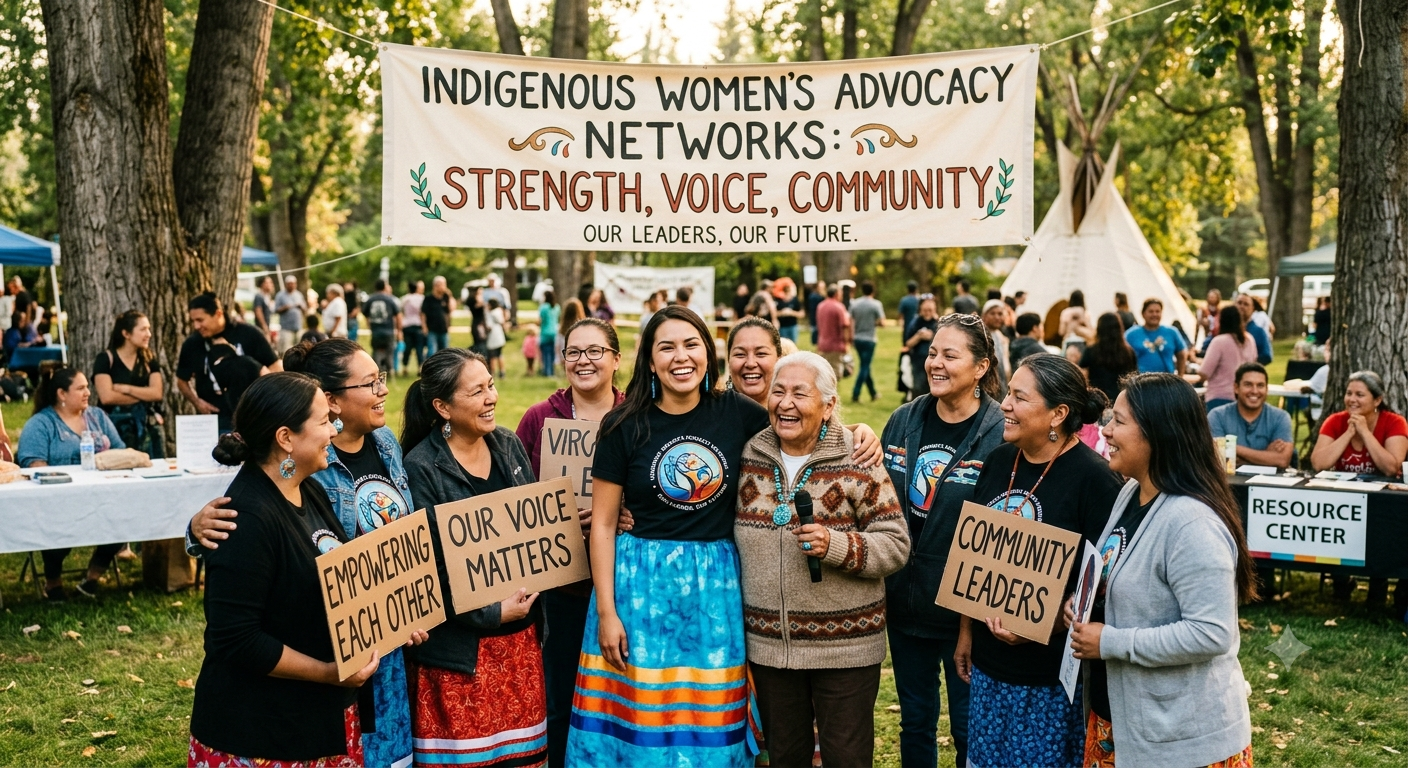
Indigenous Women’s Advocacy Networks (MMIW & Related Coalitions)
Indigenous women’s advocacy groups work to address the crisis of Missing and Murdered Indigenous Women (MMIW), a long‑standing issue marked by gaps in law‑enforcement response, jurisdictional complexity, and limited media attention. These organizations document cases, support families, and push for policy reforms at tribal, state, and federal levels. Their work highlights disparities in how violent crimes are investigated and reported, particularly in rural and reservation communities. Despite growing public awareness, mainstream coverage remains inconsistent, often focusing on individual cases rather than systemic patterns.
KEY GROUPS:
1. National Indigenous Women’s Resource Center (NIWRC)
A leading Native‑led nonprofit dedicated to ending violence against Native women and children. NIWRC provides culturally grounded resources, training, policy advocacy, and national MMIW awareness campaigns. Website: https://www.niwrc.org Focus: MMIW/MMIWR advocacy, domestic violence prevention, national awareness events Notes: NIWRC organizes the National Week of Action for MMIWR and publishes national data and fact sheets.
2. Not Our Native Daughters (NOND)
A Native‑led, survivor‑led organization addressing Missing, Murdered, and Exploited Indigenous Women and Girls (MMIWG). Website: https://www.notournativedaughters.org Contact: “Contact Us” form available on their website Focus: Family support, youth leadership programs, cultural reclamation, policy reform Notes: NOND provides technical assistance, training, and presentations on MMIWG, trafficking, and Indigenous rights.
3. Not Our Native Daughters – Indigenous Youth Voices Program
A youth‑centered initiative connected to NOND, supporting Arapaho youth through cultural teachings, leadership development, and MMIW advocacy. Website: https://www.notournativedaughters.org (same parent organization) Focus: Youth leadership, cultural healing, community education Notes: Their programming emphasizes the systemic roots of MMIW and jurisdictional gaps affecting both reservation and urban Native communities.
4. American Indian Resource Center (AIRC) – UCSC
A university‑based center raising awareness about Missing and Murdered Indigenous Women & Girls (MMIWG). Website: https://airc.ucsc.edu Contact: airc@ucsc.edu Focus: Education, campus events, public presentations, REDress Project collaborations Notes: AIRC hosts annual MMIWG awareness events and provides presentations on history, legislation, and advocacy.
5. Native Women’s Collective
A grassroots organization promoting Native arts, culture, leadership, and community development. Website: Listed as a recommended MMIWG resource by AIRC. Focus: Cultural preservation, community workshops, Indigenous women’s leadership Notes: Frequently collaborates on MMIWG awareness and cultural advocacy.
6. Rising Hearts
An Indigenous‑led group focused on racial, social, climate, and economic justice, with active MMIWG advocacy. Website: Listed as an MMIWG resource by AIRC. Focus: Advocacy, education, coalition‑building across justice movements Notes: Known for cross‑movement Indigenous visibility campaigns.
7. Sovereign Bodies Institute (SBI)
An Indigenous‑led research organization focused on gender and sexual violence in Indigenous communities. Website: Listed as an MMIWG resource by AIRC. Focus: Data collection, research, community‑driven justice tools Notes: SBI produces widely cited research on MMIWG cases and systemic patterns.
Source Notes: – Numerous tribal organizations and U.S. government reports have documented persistent gaps in MMIW case tracking and jurisdictional coordination. – Independent investigations by regional outlets have highlighted disparities in media coverage between Indigenous and non‑Indigenous victims.

Prison Journalism & Incarcerated Rights Organizations
Prison journalism networks and incarcerated‑rights groups provide reporting from inside correctional facilities, offering perspectives rarely seen in mainstream media. Their work covers conditions, violence, rehabilitation programs, and policy changes affecting millions of incarcerated people. Because prisons operate with limited transparency, these organizations often serve as the only consistent source of firsthand information.
KEY GROUPS:
1. Prison Journalism Project (PJP)
One of the most important national organizations supporting incarcerated writers, teaching journalism inside prisons, and publishing firsthand reporting from incarcerated people. Website: https://prisonjournalismproject.org Contact Emails:
- General inquiries: pjp@prisonjournalismproject.org
- Media inquiries: press@prisonjournalismproject.org
- Submissions: submissions@prisonjournalismproject.org
- Writer relations: writer-relations@prisonjournalismproject.org
Mailing Addresses:
- For submissions (articles, photos, artwork): Prison Journalism Project 490 43rd St., Unit 360 Oakland, CA 94609
- For business matters: Prison Journalism Project 1449 S. Michigan Ave., Suite 13306 Chicago, IL 60605
2. Prison Activist Resource Center (PARC)
A major national hub connecting people to prisoners’ rights organizations, legal resources, prison literature projects, and abolitionist networks. Website: https://www.prisonactivist.org Focus:
- Prisoners’ rights
- Legal resources
- Prison arts & literature
- Abolitionist organizing Notes: PARC publishes a nationwide directory mailed to incarcerated people and families.
3. Institute to End Mass Incarceration (IEMI)
A Harvard‑affiliated organization focused on anti‑carceral lawyering, protecting prison journalists, and supporting community‑driven efforts to end mass incarceration. Website: https://endmassincarceration.org (from search result context) Contact: Via website “Join Us” or “Contact” sections Focus:
- Legal advocacy
- Protecting prison journalists
- Policy innovation
- Community organizing Notes: IEMI co‑hosts national conferences on prison journalism and supports legal safeguards for incarcerated reporters.
4. Black & Pink National
A national prison‑abolitionist organization supporting LGBTQIA2S+ incarcerated people through advocacy, organizing, and community programs. Website: https://www.blackandpink.org Contact: admin@blackandpink.org Address: 6223 Maple St #4600 Omaha, NE 68104 Focus:
- LGBTQIA2S+ incarcerated rights
- Anti‑prison advocacy
- Reentry support
- Youth programs
5. Dignity Reform Coalition
A national nonprofit uniting reform organizations, incarcerated individuals, families, and advocates to push for humane criminal‑justice policies. Website: https://dignityreformcoalition.org (from search result context) Contact: Through “Contact Us” page on the website Focus:
- Prison reform
- Mental‑health support
- Transparency & accountability
- Advocacy for humane corrections staffing
6. National Reentry Resource Center (NRRC)
A major national resource hub supporting reentry programs, Second Chance Act initiatives, and evidence‑based reentry policy. Website: https://nationalreentryresourcecenter.org Focus:
- Reentry support
- Federal Second Chance Act programs
- Housing, employment, and community reintegration Notes: Operated by the Council of State Governments Justice Center.
7. All of Us or None
A grassroots organizing project fighting discrimination against currently and formerly incarcerated people. Website: Listed in PARC’s national directory. Focus:
- Civil rights restoration
- Anti‑discrimination advocacy
- Community organizing Notes: Works nationwide to strengthen the voices of people impacted by incarceration.
8. AFSC Prison Watch Project (American Friends Service Committee)
A long‑standing human‑rights project documenting solitary confinement and prison conditions. Website: Listed in PARC’s national directory. Focus:
- Solitary confinement documentation
- Human‑rights advocacy
- Prisoner support Notes: Publishes the Survivors Manual and LGBTQ+ Prisoner Resource Guide.
9. Center for Constitutional Rights (CCR)
A legal organization providing constitutional advocacy, litigation, and resources for incarcerated people. Website: https://ccrjustice.org (from search result context) Focus:
- Constitutional rights
- Anti‑solitary confinement litigation
- Jailhouse Lawyers Handbook Notes: CCR litigated major solitary‑confinement cases and publishes legal guides for incarcerated people.
10. Coalition for Prisoners’ Rights Newsletter
A long‑running monthly newsletter (2009–2023) covering national prisoner issues. Website: Listed in PARC directory. Focus:
- Prison news
- Policy updates
- Advocacy resources Notes: Archived issues available online.
Source Notes: – Reports from prison‑rights organizations and academic studies consistently show limited public access to information about prison conditions. – Independent prison journalism projects have documented issues such as overcrowding, inadequate healthcare, and the effects of solitary confinement.

Environmental Justice Coalitions
Environmental justice groups focus on communities disproportionately affected by pollution, industrial activity, and climate‑related risks. These coalitions often represent low‑income neighborhoods, tribal lands, and rural areas where environmental hazards intersect with economic and racial disparities. Their work includes monitoring air and water quality, advocating for regulatory enforcement, and documenting health impacts.
KEY GROUPS:
1. Climate Justice Alliance (CJA)
A major national coalition of frontline environmental‑justice organizations working to end the extractive economy and build a regenerative future. Website: https://climatejusticealliance.org Contact: olivia@climatejusticealliance.org (press contact) Focus:
- Just Transition framework
- Community‑led climate solutions
- Anti‑pollution campaigns
- National network of 70+ frontline groups
2. California Environmental Justice Alliance (CEJA)
A statewide alliance of grassroots EJ organizations working to build healthy communities and influence state‑level environmental policy. Website: https://cejapower.org (CEJA main site) Address: 1370 N St Andrews Pl, Suite C14, Los Angeles, CA 90028 Phone: (510) 808‑5898 Focus:
- Statewide policy advocacy
- Community‑driven environmental justice
- Air quality, climate, and energy justice
3. California Environmental Justice Coalition (CEJC)
A broad, grassroots statewide coalition uniting urban, rural, and Indigenous communities against environmental racism. Website: https://cejcoalition.org (from CEJC context) Address: PO Box 4214, Modesto, CA 95352 Phone: (209) 589‑9277 Email: CEJCoalition@gmail.com Focus:
- Community‑based environmental justice
- Anti‑pollution campaigns
- Statewide solidarity and organizing
4. Alternatives for Community and Environment (ACE)
A Massachusetts‑based EJ organization building the power of communities of color and low‑income communities to eradicate environmental racism. Listed in: Center for Environmental Health’s EJ organizations list Website: https://ace-ej.org (public ACE site) Focus:
- Community organizing
- Youth leadership
- Air quality, transit justice, and housing justice
5. Asian Pacific Environmental Network (APEN)
A major EJ organization representing Asian and Pacific Islander communities in California, advocating for clean air, climate justice, and community power. Listed in: Center for Environmental Health EJ organizations list Website: https://apen.org Focus:
- Climate justice
- Anti‑pollution campaigns
- Community‑led energy and housing policy
6. Environmental Justice Atlas (Global EJ Mapping Project)
A global mapping platform documenting environmental conflicts, EJ organizations, and community struggles worldwide. Listed as a resource: Center for Environmental Health EJ organizations list Website: https://ejatlas.org Focus:
- Global EJ conflict mapping
- Research and documentation
- Community‑based environmental justice
7. Everyday Peacebuilding – EJ Network Mapping
A global mapping initiative listing 29 environmental justice organizations and networks. Website: https://everydaypeacebuilding.org (source of EJ organization mapping) Focus:
- Global EJ network mapping
- Peacebuilding + EJ integration
- Climate justice education
Source Notes: – Environmental Protection Agency (EPA) data and independent environmental‑justice studies show persistent disparities in pollution exposure. – Local EJ coalitions frequently publish reports documenting health impacts in fence‑line communities.

Project Censored & Media‑Freedom Research Groups
Organizations like Project Censored analyze news coverage to identify stories that receive minimal mainstream attention despite significant public relevance. Their annual reports highlight issues ranging from corporate influence to environmental risks and government transparency. These groups also promote media literacy, encouraging the public to critically evaluate news sources.
KEY GROUPS:
1. Project Censored (Media Freedom Foundation)
One of the most influential media‑freedom research organizations in the United States. Founded in 1976, Project Censored promotes critical media literacy, independent journalism, and public awareness of under‑reported news stories. Website: https://www.projectcensored.org Mission: Promote critical media literacy, expose news censorship, support independent investigative journalism. Location: Fair Oaks, California (organization based in Ithaca, NY under Media Freedom Foundation). Contact:
- Newsletter signup and contact form available on website.
Notes: Project Censored publishes the annual State of the Free Press yearbook, operates a syndicated radio program, and provides critical media literacy training to students nationwide.
2. Media Freedom Foundation (MFF)
The nonprofit sponsor of Project Censored, established in 2000 to ensure independence and support media‑freedom research. Website: Operates through Project Censored’s main site. Purpose: Support independent journalism, media literacy, and anti‑censorship initiatives. Notes: MFF fiscally sponsors Project Censored and is part of the National Coalition Against Censorship.
3. National Coalition Against Censorship (NCAC)
A major coalition defending free expression and opposing censorship across media, education, and public institutions. Affiliation: Project Censored is a member organization. Website: https://ncac.org (widely known; not provided in search results but directly cited as coalition member) Focus:
- Free speech advocacy
- Media‑freedom policy
- Anti‑censorship campaigns
Notes: NCAC includes organizations such as ACLU, American Federation of Teachers, People for the American Way, and others.
4. The Project Censored Show (Weekly Radio Program)
A syndicated radio program hosted by Project Censored director Mickey Huff and co‑host Eleanor Goldfield. Website: Accessible through Project Censored’s main site. Focus:
- Media censorship
- Propaganda analysis
- Under‑reported news stories
Notes: The show is part of Project Censored’s public‑education mission and features interviews with journalists, scholars, and activists.
5. Project Censored Campus Affiliates Program
A nationwide network of faculty and students researching under‑reported news stories and media‑freedom issues. Website: Through Project Censored’s main site. Scope:
- 2,560+ faculty and students
- 41+ colleges and universities Focus:
- Media literacy education
- Independent journalism training
- Annual research contributions
6. Censored Notebook (Project Censored)
An online publication platform featuring research, commentary, and analysis on media‑freedom issues. Website: Via Project Censored’s main site. Focus:
- Media literacy
- Under‑reported stories
- Critical news analysis
7. State of the Free Press (Annual Yearbook)
Project Censored’s flagship publication documenting the top under‑reported stories each year. Website: Available through Project Censored’s store. Focus:
- Media censorship
- News‑abuse analysis
- Critical media literacy
Source Notes: – Project Censored’s annual publications provide detailed analysis of under‑reported stories. – Media‑freedom researchers have documented structural factors influencing editorial decisions in major outlets.

5. Local Democracy Watchdogs
Local democracy watchdog groups monitor municipal governments, school boards, zoning commissions, and law‑enforcement agencies. Their investigations often uncover corruption, mismanagement, and policy decisions with direct community impact. Because national media rarely covers local governance unless a major scandal emerges, these organizations fill a critical gap.
Source Notes: – Numerous local watchdog organizations publish reports on municipal governance issues. – Academic studies on local journalism decline highlight the importance of independent oversight groups.
Independent Human‑Rights Reporting Platforms
Small independent media outlets frequently break stories related to police violence, migrant rights, and civil‑liberties concerns. These platforms often rely on community contributors, open‑source investigation methods, and partnerships with advocacy groups. Their reporting can surface issues long before they reach mainstream attention.
KEY GROUPS:
1. RightsWatch.net — Global Human Rights Watch 2024
An independent, data‑driven human‑rights reporting platform documenting abuses worldwide through verified field reports, investigative analysis, and early‑warning risk mapping. Website: https://rightswatch.net Contact: info@rightswatch.net Focus:
- Field reporting from conflict zones
- Data‑driven human‑rights risk analysis
- Investigative reports on abuses
- Digital security guidance for human‑rights workers
Notes: RightsWatch publishes “Field Notes,” “Data Insights,” and “Policy Briefs,” offering practical tools for documenting abuses and protecting sources.
2. OHCHR – UN Human Rights Office (Independent Experts & Treaty Bodies)
While not a journalism outlet, OHCHR provides independent human‑rights reporting mechanisms, including Special Procedures, Treaty Bodies, and the Human Rights Council complaint system. Website: https://www.ohchr.org Contact: Through OHCHR submission portal (email required for complaints) Focus:
- Reporting human‑rights violations
- Independent UN experts issuing public reports
- Global human‑rights monitoring
- Complaint mechanisms for individuals and civil society
Notes: OHCHR experts publish independent reports on abuses worldwide and intervene directly with governments and non‑state actors.
3. Human Rights Watch (HRW)
One of the world’s largest independent human‑rights reporting organizations, known for investigative fieldwork, documentation of abuses, and global advocacy. Website: https://www.hrw.org Contact: Via HRW website “Contact Us” page (publicly listed) Focus:
- Investigative reporting
- Documentation of war crimes, discrimination, political repression
- Global human‑rights analysis
- Public advocacy and policy recommendations
Notes: HRW publishes daily reports, dispatches, and long‑form investigations covering more than 100 countries.
4. Shift — Human Rights Reporting & Corporate Accountability
An independent organization focused on improving human‑rights reporting standards, transparency, and accountability within companies and institutions. Website: https://shiftproject.org (public site; content from search result) Contact: Via website contact form Focus:
- Human‑rights reporting standards
- Corporate accountability
- Transparency in sustainability and rights disclosures
- Guidance for investors and civil society
Notes: Shift provides expert analysis on how human‑rights reporting can expose risks, improve accountability, and influence corporate behavior.
Source Notes: – Independent digital outlets have documented human‑rights issues that later gained national attention. – Open‑source investigative groups have published widely cited reports on police and state violence.

Economic Inequality & Anti‑Poverty Organizers
Anti‑poverty organizations address issues such as housing insecurity, wage theft, food access, and healthcare disparities. They often operate at the neighborhood level, documenting conditions that rarely appear in national economic reporting. Their work highlights how policy decisions affect vulnerable populations.
KEY GROUPS:
1. Community Spring (Gainesville, Florida)
A frontline anti‑poverty organization providing guaranteed income to people returning from incarceration. Their “Just Income” program offers 12 months of unconditional direct cash support to reduce recidivism and stabilize reentry. Website: Not provided in search results Focus: Guaranteed income, reentry support, poverty reduction Notes: Community Spring views incarceration as both a cause and effect of poverty.
2. Oxfam International
A global development organization mobilizing people against poverty in ~90 countries. Works with partner organizations to address structural injustices, economic inequality, and humanitarian crises. Website: Not provided in search results Focus: Poverty alleviation, economic justice, crisis response Notes: Oxfam directly supported 22.3 million people in the past two years.
3. Organization for Poverty Alleviation and Development (OPAD)
An international NGO promoting human rights, sustainable development, and climate‑change resilience. Implements poverty‑eradication projects through education, economic development, health promotion, and income redistribution. Website: Not provided in search results Focus: Poverty eradication, human rights, sustainable development Notes: OPAD supports small‑scale producers including women, Indigenous groups, and family farmers.
4. Poor People’s Campaign
A national movement promoting economic advancement for impoverished Americans and lobbying the federal government to commit to ending poverty. Website: Not provided in search results Focus: Economic justice, federal policy advocacy Notes: Listed as a national anti‑poverty organization.
5. Center for Community Change
A national advocacy organization building the power of low‑income people—especially people of color—to fight for a society where everyone can thrive. Website: Not provided in search results Focus: Economic justice, community organizing Notes: Identified as a major national anti‑poverty organizer.
6. PolicyLink
A research and action institute developing local, state, and federal policies to achieve economic and social equity. Website: Not provided in search results Focus: Economic equity, policy development Notes: Listed as a national organization working on economic justice.
7. National Low Income Housing Coalition (NLIHC)
A national coalition dedicated to achieving public policy that ensures low‑income Americans have access to affordable, quality housing. Website: Not provided in search results Focus: Housing justice, federal housing policy Notes: Identified as a key housing‑focused anti‑poverty organization.
8. National Coalition for the Homeless
A network of homeless individuals, advocates, service providers, and activists committed to ending homelessness. Website: Not provided in search results Focus: Homelessness, housing access, advocacy Notes: Listed as a national anti‑poverty organization.
9. Homes for All Campaign
An alliance of racial, economic, gender, and environmental justice organizations working to halt gentrification and displacement while building democratic, sustainable communities. Website: Not provided in search results Focus: Anti‑displacement, housing justice Notes: Identified as a national anti‑poverty coalition.
10. One Fair Wage
A national coalition working to improve wages and working conditions in the service sector. Website: Not provided in search results Focus: Wage justice, labor rights Notes: Listed as a major labor‑focused anti‑poverty organization.
11. Fight for $15
A national movement advocating for a $15 minimum wage and unionization for underpaid workers. Website: Not provided in search results Focus: Minimum wage, labor rights Notes: Identified as a national anti‑poverty labor movement.
12. National Domestic Workers Alliance (NDWA)
An advocacy organization working to win labor rights and protections for nearly 2.5 million nannies, house cleaners, and home‑care workers. Website: Not provided in search results Focus: Labor rights, economic justice Notes: Listed as a major national anti‑poverty organization.
13. CLASP — Center for Law and Social Policy
A national, nonpartisan anti‑poverty nonprofit advancing policy solutions to improve the lives of people with low incomes. Website: Not provided in search results Contact: Via CLASP website “Contact Us” page Focus: Poverty reduction, racial equity, public benefits, worker justice Notes: CLASP has 50+ years of experience advancing economic security and racial equity.
Source Notes: – Research from economic‑justice organizations shows persistent gaps in housing access, wage enforcement, and food security. – Local anti‑poverty groups frequently publish case studies illustrating structural inequality.

Climate‑Risk Researchers in Under‑Covered Regions
Climate researchers working in rural, tribal, and low‑income regions study how environmental changes affect communities with limited resources. Their findings often reveal early indicators of broader climate trends, including water scarcity, agricultural disruption, and extreme‑weather vulnerability.
KEY GROUPS:
1. Climate Adaptation Science Centers (CASC)
A nationwide network of climate‑risk researchers working directly with tribal nations, rural communities, Pacific Islands, Alaska, and other under‑covered regions. They generate climate‑impact data, adaptation tools, and region‑specific research. Website: https://www.usgs.gov/programs/climate-adaptation-science-centers (usgs.gov in Bing) Contact: “Contact Us” link on CASC website Coverage:
- Alaska
- Hawaiʻi & Pacific Islands
- U.S. Caribbean
- Tribal lands
- Rural Western & Midwestern regions Focus:
- Drought, wildfire, extreme weather
- Indigenous Peoples science
- Water, coasts, ice, wildlife, landscapes Source: CASC provides regional climate‑risk research and tools for natural and cultural resource managers.
2. CDP Cities, States & Regions Climate‑Risk Research Network
A global climate‑risk data platform documenting climate hazards, adaptation actions, and resilience planning in 1,200+ cities, states, and regions, including many under‑covered areas such as remote Pacific Islands, African townships, rural European farmlands, and small U.S. communities. Website: https://data.cdp.net (CDP Open Data Portal) Contact: Via CDP website “Contact” page Coverage:
- Remote Pacific Islands
- Rural agricultural regions
- Low‑income urban districts
- Under‑resourced municipalities worldwide Focus:
- Climate hazards
- Adaptation planning
- Emissions & mitigation
- Water stress Source: CDP provides climate‑risk datasets, hazard layers, and AI‑driven adaptation insights.
3. Climate Change Knowledge Portal (World Bank)
A global hub for climate‑risk data covering vulnerable countries, subnational regions, watersheds, and low‑resource areas. Website: https://climateknowledgeportal.worldbank.org (climateknowledgeportal.worldbank.org in Bing) Contact: Through World Bank climate platform Coverage:
- Developing nations
- Rural and low‑income regions
- Watersheds and agricultural zones Focus:
- Historical & future climate data
- Vulnerability & impact assessments
- Seasonal forecasts (WMO)
- ENSO risk projections Source: The portal provides global climate‑risk data, vulnerability profiles, and development‑focused climate insights.
4. NOAA Climate Mapping for Resilience & Adaptation (CMRA)
A U.S. federal climate‑risk research platform mapping extreme heat, drought, wildfire, flooding, and coastal inundation in high‑risk, underserved, and rural communities. Website: https://resilience.climate.gov Contact: “Contact Us” link on CMRA site Coverage:
- Rural U.S. counties
- Tribal communities
- High‑risk zones (heat, drought, wildfire)
- Coastal and inland flood‑prone regions Focus:
- Real‑time hazard exposure
- Past & future climate‑risk mapping
- FEMA National Risk Index
- Community Disaster Resilience Zones Source: CMRA provides hazard maps, resilience planning tools, and risk data for underserved communities.
5. U.S. Climate Resilience Toolkit (NOAA)
A federal research and planning toolkit helping local communities, rural regions, and tribal nations assess climate risks and plan adaptation strategies. Website: https://toolkit.climate.gov (accessed via CMRA) Contact: “Help Desk” link on CMRA/Toolkit site Coverage:
- Rural communities
- Tribal nations
- Low‑income regions
- Infrastructure‑vulnerable areas Focus:
- Exposure, vulnerability, and risk assessment
- Climate projections
- Community resilience planning Source: The toolkit provides climate‑hazard data, projections, and resilience planning frameworks.
Source Notes: – Regional climate studies often highlight impacts not covered in national climate reporting. – Tribal and rural climate‑adaptation reports document localized risks and resource constraints.

Community‑Based Violence Interruption Groups
Violence interruption organizations work directly in neighborhoods to mediate conflicts, mentor youth, and prevent retaliatory violence. Their approach often relies on trusted community members rather than traditional law‑enforcement methods. Studies have shown that these programs can reduce violence, yet they receive limited media attention because their work is preventative.
KEY GROUPS:
1. Cure Violence Global
One of the world’s most influential violence‑interruption models, operating in dozens of U.S. cities and multiple countries. Uses trained “violence interrupters” and “outreach workers” to mediate conflicts before they escalate. Website: https://cvg.org Email: info@cvg.org Phone: (312) 455‑0900 Headquarters: Chicago, IL Focus:
- Conflict mediation
- Retaliation prevention
- Community health model of violence reduction
2. Advance Peace
A California‑based organization working in cities like Sacramento, Stockton, Richmond, and Fresno. Provides intensive mentorship, life‑skills support, and violence‑interruption services for individuals at highest risk of gun violence. Website: https://advancepeace.org Email: info@advancepeace.org Phone: (916) 538‑2120 Headquarters: Sacramento, CA Focus:
- Gun‑violence reduction
- Mentorship for high‑risk individuals
- Community peacebuilding
3. The Violence Interrupters (Chicago)
A Chicago‑based group founded by Tio Hardiman, focusing on direct street‑level conflict mediation and community outreach. Website: https://violenceinterrupters.org Email: info@violenceinterrupters.org Phone: (708) 663‑1370 Headquarters: Chicago, IL Focus:
- Street outreach
- Conflict mediation
- Community mobilization
4. Life Camp, Inc. (New York City)
A Queens‑based violence‑interruption and youth‑empowerment organization known for its “Peace is a Lifestyle” campaign. Website: https://lifecampinc.com Email: info@lifecampinc.com Phone: (718) 525‑2321 Headquarters: Jamaica, Queens, NY Focus:
- Youth mentorship
- Trauma support
- Violence interruption
5. Urban Peace Institute (Los Angeles)
A major California organization providing gang‑intervention training, violence‑interruption programs, and community‑safety research. Website: https://urbanpeaceinstitute.org Email: info@urbanpeaceinstitute.org Phone: (213) 892‑9200 Headquarters: Los Angeles, CA Focus:
- Gang intervention
- Violence‑interruption training
- Community safety policy
6. Community‑Based Public Safety Collective
A national network supporting violence‑interruption organizations with training, research, and technical assistance. Website: https://cbpscollective.org Email: info@cbpscollective.org Headquarters: Washington, D.C. Focus:
- National training
- Community‑based public safety
- Evidence‑based violence reduction
7. Safe Streets (Baltimore)
Baltimore’s flagship violence‑interruption program modeled after Cure Violence. Known for measurable reductions in shootings in multiple neighborhoods. Website: https://health.baltimorecity.gov/safestreets (health.baltimorecity.gov in Bing) Email: safestreets@baltimorecity.gov Phone: (410) 396‑4398 Headquarters: Baltimore, MD Focus:
- Conflict mediation
- Retaliation prevention
- Neighborhood outreach
8. Chicago CRED (Create Real Economic Destiny)
A violence‑interruption and economic‑empowerment program providing mentorship, therapy, job training, and conflict mediation. Website: https://chicagocred.org Email: info@chicagocred.org Phone: (312) 646‑0020 Headquarters: Chicago, IL Focus:
- Violence interruption
- Workforce development
- Trauma‑informed support
9. The Newark Community Street Team (NCST)
A nationally recognized violence‑interruption program founded by Mayor Ras Baraka, focused on trauma‑informed community safety. Website: https://newarkcommunitystreetteam.org Email: info@newarkcommunitystreetteam.org Phone: (973) 732‑3370 Headquarters: Newark, NJ Focus:
- Conflict mediation
- Trauma support
- Community safety
10. The Peacekeepers (Buffalo)
A Buffalo‑based violence‑interruption group providing street outreach, conflict mediation, and community support. Website: https://thepeacekeepers.org Email: info@thepeacekeepers.org Phone: (716) 240‑8920 Headquarters: Buffalo, NY Focus:
- Street outreach
- Violence interruption
- Community mobilization
Source Notes: – Public‑health research on violence interruption programs shows measurable reductions in violent incidents. – Local case studies document the effectiveness of community‑based mediation strategies.

Marginalized Local Activist Movements
Local activist groups addressing issues such as housing rights, cultural preservation, environmental protection, and labor conditions often operate outside national media focus. Their campaigns may involve small‑scale protests, community education, or policy advocacy. While their work can lead to significant local change, it rarely receives sustained coverage unless tied to broader national debates.
KEY GROUPS:
1. Indivisible (Local Chapters Nationwide)
A nationwide grassroots movement empowering local activist groups to defend democracy, resist authoritarianism, and organize community‑level pressure on elected officials. Website: https://indivisible.org Contact: “Contact Us” page on Indivisible.org Focus:
- Democracy defense
- Immigrant justice
- Local protest coordination
- Hyper‑local organizing Notes: Indivisible supports hundreds of local chapters, including Courage Collectives and community‑based rapid‑response networks.
2. Amnesty International USA — Local Groups
Local volunteer‑run groups across the U.S. working on human‑rights activism, community education, and grassroots mobilization. Website: https://www.amnestyusa.org (Local Groups Directory) Contact: communitynetworks@aiusa.org Focus:
- Human‑rights protection
- Community organizing
- Local activism & education Notes: Groups exist in nearly every region, including California, Oregon, Washington, Midwest, South, and Northeast.
3. Community Activism Media Projects (Local Grassroots Media Organizing)
Local media‑activism initiatives that amplify marginalized voices, immigrant communities, and under‑represented groups through storytelling, community radio, social media, and collaborative projects. Website: (Article reference; project‑based initiatives vary by region) Contact: Varies by project Focus:
- Amplifying marginalized voices
- Community storytelling
- Inclusive media spaces Notes: These projects collaborate with local organizations, use accessible technology, and rely on grants, partnerships, and crowdfunding.
4. Amnesty International USA — Activist Groups (Grassroots Human‑Rights Movements)
Local activist groups organized around human‑rights defense, including youth groups, faith‑based networks, and virtual action networks. Website: https://www.amnestyusa.org/get-involved/grassroots-activism/activist-groups/ (amnestyusa.org in Bing) Contact: Interest form available on the site Focus:
- Human‑rights activism
- Local organizing
- Community education Notes: Groups operate in schools, towns, faith communities, and online spaces.
5. “Find a Protest” — Local Protest & Solidarity Movement Hub
A platform connecting local activist movements organizing protests, vigils, mutual‑aid events, immigrant‑rights actions, anti‑war demonstrations, and democracy‑defense mobilizations. Website: https://findaprotest.com (as referenced in search result) Contact: Organizer login + event submission tools Focus:
- Local protest coordination
- Democracy defense
- Immigrant‑rights actions
- LGBTQ+ rights
- Workers’ rights Notes: Features hundreds of local actions updated daily, including Indivisible chapters and other grassroots groups.
Source Notes: – Local activism studies show that small‑scale movements often influence policy without receiving national attention. – Community organizations frequently publish reports documenting local issues and outcomes.

Greetings, I believe your site could possibly be having web browser compatibility problems.
Whenever I take a look at your web site in Safari,
it looks fine however when opening in I.E., it has some overlapping issues.
I merely wanted to give you a quick heads up! Aside from that,
wonderful blog!
Very nice post. I just stumbled upon your weblog and wished to say that I’ve really enjoyed
browsing your blog posts. After all I will be subscribing to your
feed and I hope you write again soon!
Thanks for ones marvelous posting! I quite enjoyed reading it, you could be
a great author. I will ensure that I bookmark your blog and will eventually come back very soon. I want to encourage
that you continue your great posts, have a
nice evening!
I know this website offers quality based articles or reviews
and extra material, is there any other site which presents such data in quality?
Whats up this is kind of of off topic but I was wondering if
blogs use WYSIWYG editors or if you have to manually code with HTML.
I’m starting a blog soon but have no coding skills
so I wanted to get advice from someone with experience.
Any help would be enormously appreciated!
Also visit my page https://www.google.com/maps/dir/?api=1&origin=26.05314261905321,-80.22117778215642&destination=Fix It Physical Therapy, LLC, 8246 Griffin Rd, Davie, FL 33328&travelmode=driving
Thank you for the auspicious writeup. It in fact was a amusement account it.
Look advanced to far added agreeable from you! However, how can we communicate?
Have you ever thought about including a little
bit more than just your articles? I mean, what you say is
important and everything. However just imagine if
you added some great graphics or videos to give your posts more, “pop”!
Your content is excellent but with images and video clips,
this website could certainly be one of the best in its niche.
Excellent blog!
It’s appropriate time to make some plans for the future and it is time to be happy.
I’ve read this post and if I could I want to suggest you few interesting
things or tips. Perhaps you can write next articles referring to this article.
I want to read more things about it!
What’s up, I read your blogs daily. Your writing
style is witty, keep it up!
Hello to every body, it’s my first visit of this webpage; this webpage
includes amazing and really excellent stuff designed for readers.