Why the internet and artificial intelligence depend on discoveries most people will never need to understand—but could not live without
An exploration of the advanced mathematics, theoretical physics, and computer science that make our digital world possible.
Imagine asking an artificial intelligence system to explain the theory of relativity, translate a Japanese poem, identify a disease from a medical scan, or write a computer program. The answer may arrive in seconds. Behind that apparent simplicity, however, lies an extraordinary intellectual achievement: the conversion of abstract mathematics into machines capable of processing information, identifying patterns, and performing tasks that once seemed to require human intelligence.
The modern digital world is often described in terms of its visible inventions: the smartphone, the internet browser, the data center, the chatbot. Yet the deepest innovations frequently occur far from public view, in university laboratories and research institutions where mathematicians, physicists, statisticians, and computer scientists investigate questions that can appear remote from practical life.
What is the geometry of an unimaginably large space of possibilities? How can a machine distinguish a meaningful signal from noise? What is the mathematical relationship between a system’s internal parameters and its ability to learn? How can information travel through a network reliably when individual components fail, signals become corrupted, or millions of people attempt to communicate simultaneously?
These are not merely academic questions. They are among the intellectual foundations of the modern world.
The extraordinary lesson of the digital age is that some of humanity’s most consequential technologies have emerged from theories developed decades before anyone knew what to do with them.
And as artificial intelligence becomes more capable, the relationship between abstract knowledge and practical invention is becoming more important, not less.
I. The internet began as a mathematical problem
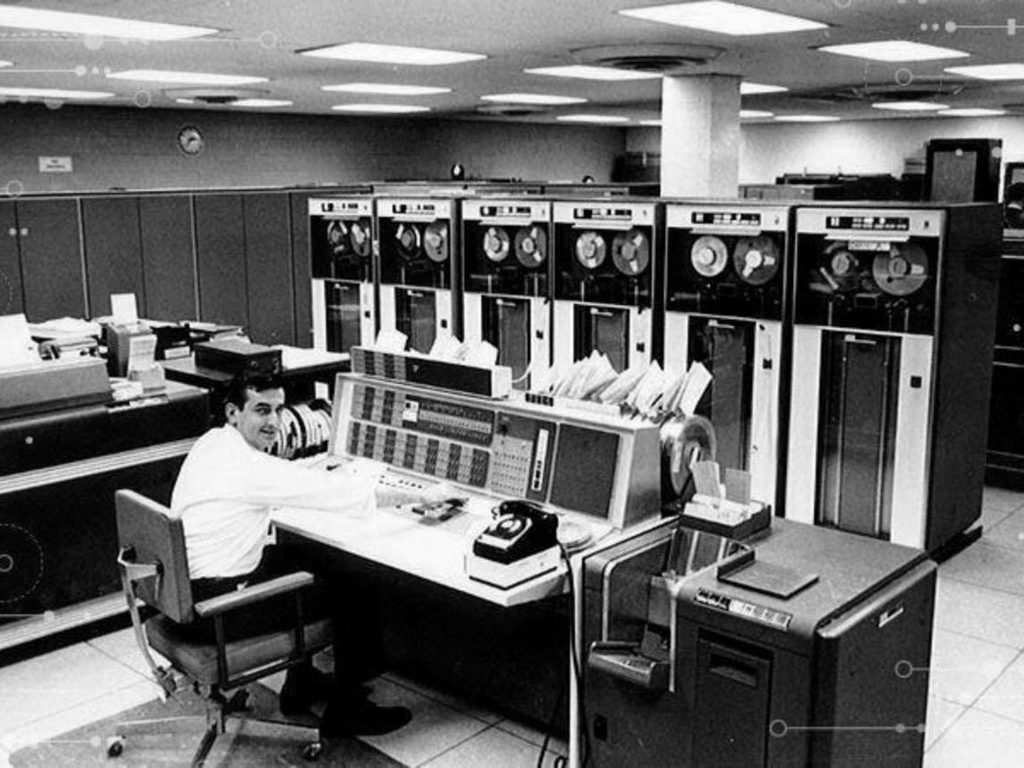
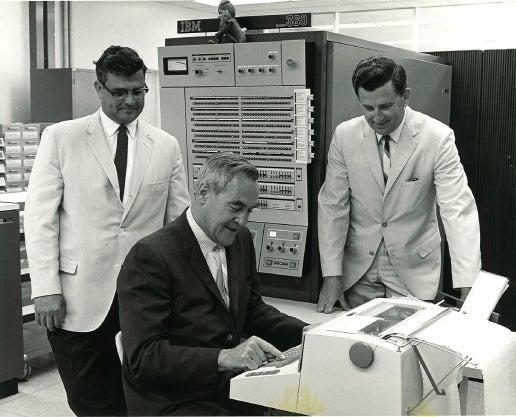
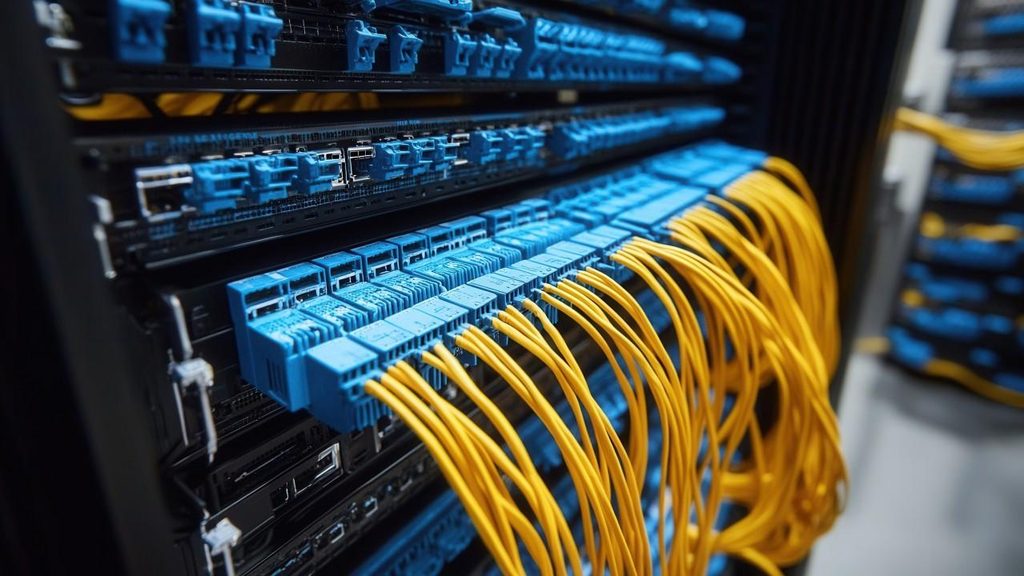
The internet is commonly understood as a physical network of computers, cables, routers, satellites, and wireless connections. But its operation depends on something less tangible: the mathematics of communication.
Long before the modern internet existed, researchers were trying to answer a fundamental question. How can information be transmitted accurately and efficiently through a channel that is limited, noisy, and sometimes unreliable?
In 1948, the mathematician and electrical engineer Claude Shannon published a landmark paper establishing what became known as information theory. His work provided a mathematical framework for understanding information itself, including how much information a communication channel can carry and how effectively it can be encoded.
Shannon’s insight was revolutionary because it separated the meaning of a message from the information required to represent and transmit it. Whether a message contained a Shakespeare sonnet, a scientific measurement, or a string of meaningless characters, its transmission could be analyzed mathematically.
This distinction helped establish the foundations for modern digital communications.
The mathematics of getting a message through
Consider a video call. Your voice is converted into digital data, divided into packets, transmitted through a network, and reconstructed at the other end. The packets may take different routes. Some may be delayed or lost. Other traffic may compete for the same network capacity.
Several mathematical disciplines help solve these problems:
- Probability theory estimates the likelihood of transmission errors, congestion, and component failures.
- Statistics helps engineers measure network performance and distinguish meaningful changes from random fluctuations.
- Graph theory represents networks as interconnected nodes and links, allowing researchers to study routing, connectivity, and resilience.
- Optimization theory helps determine how to allocate bandwidth, computing resources, and transmission capacity.
- Coding theory provides methods for detecting and correcting errors in transmitted information.
These disciplines are not simply academic embellishments added to a finished technology. They help determine whether the technology works at all.
A communication system must transmit information at useful speeds, withstand errors, and operate within physical and economic constraints. Mathematics establishes what is possible, what is efficient, and what trade-offs must be accepted.
Why abstraction matters
A network engineer can troubleshoot a particular connection by examining its cables, routers, and settings. But designing a communications system that serves billions of devices requires more general principles.
The distinction is similar to the difference between repairing one bridge and developing a theory of structural engineering. The first task can be accomplished through experience and practical knowledge. The second requires mathematical models that explain how structures behave across many different circumstances.
The internet became a global infrastructure partly because researchers learned to describe communication in ways that could be applied across different machines, networks, and physical environments.
The mathematics was general. The applications were nearly limitless.
II. Artificial intelligence is mathematics that learns
If information theory helped make the internet possible, a different collection of mathematical disciplines helped make modern artificial intelligence possible.
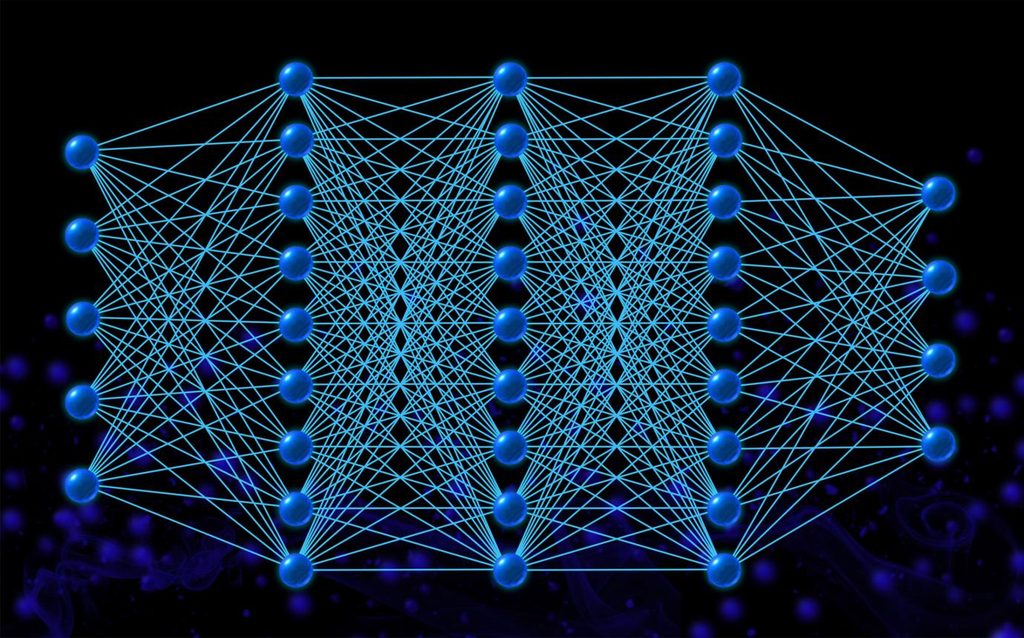
Today’s advanced AI systems are not simply collections of rules written by programmers. Many are neural networks: computational systems whose adjustable numerical parameters are trained on large quantities of data. During training, the system repeatedly makes predictions, measures its errors, and adjusts its parameters in an effort to improve.
That description sounds straightforward. The mathematics beneath it is not.
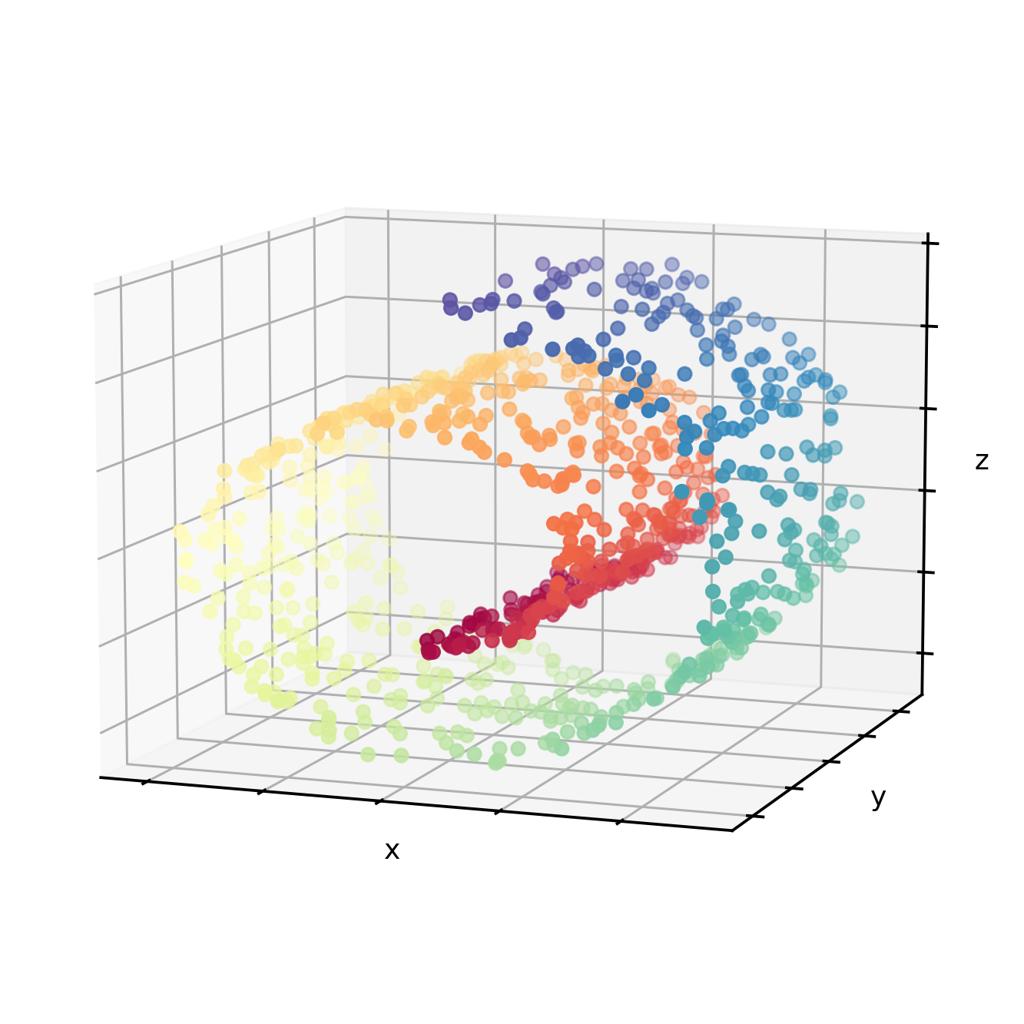
A large neural network may contain billions of adjustable parameters. Those parameters interact through layers of calculations, transforming an input into an output. Training the network requires finding parameter values that produce useful results across an enormous range of examples.
This is an optimization problem of extraordinary scale.
The calculus of learning
One of the most important mathematical tools in AI is calculus, particularly differential calculus.
Calculus studies how quantities change. In machine learning, researchers use derivatives to estimate how changes in a model’s parameters affect its performance.
Suppose an AI system is learning to recognize photographs of cats. It receives an image and produces a prediction. If the prediction is incorrect, a mathematical function measures the error. The training process then attempts to adjust the network’s parameters to reduce that error.
A common technique is called gradient descent.
Imagine standing on a mountain in thick fog and trying to reach the lowest point in the surrounding terrain. You cannot see the entire landscape, but you can estimate which direction slopes downward where you are standing. You take a step, measure again, and repeat.
Gradient descent follows a comparable principle. The gradient indicates how a function changes with respect to its parameters, and the algorithm uses that information to seek lower error.
In practice, training a modern AI system is far more complicated than descending a simple hillside. The mathematical landscape may have billions of dimensions, and the system must balance competing objectives while processing enormous amounts of data.
Yet the underlying principle is rooted in calculus.
The chain rule and backpropagation
A particularly important technique is backpropagation, which uses the chain rule of calculus to determine how errors at a network’s output relate to parameters in earlier layers.
The chain rule allows researchers to calculate derivatives through a sequence of connected mathematical operations. Backpropagation applies this principle efficiently, distributing information about prediction errors backward through a neural network.
Without this method, training large networks would be substantially more difficult.
The significance extends beyond image recognition. Similar principles are used in language models, speech recognition, scientific prediction, and many other machine-learning applications.
An advanced AI system may appear to learn language, but much of its training depends on calculating derivatives, multiplying matrices, estimating statistical relationships, and repeatedly adjusting numerical parameters.
The apparent intelligence emerges from a mathematical process.
Linear algebra: the language of neural networks
Another essential discipline is linear algebra, the study of vectors, matrices, and transformations.
In an AI system, words, images, sounds, and other inputs are represented numerically. These representations can be organized as vectors: ordered collections of numbers.
Matrices transform those vectors. By combining matrix multiplication with other operations, a neural network can transform raw inputs into increasingly useful representations.
Consider the sentence:
The bank was beside the river.
To interpret it properly, an AI system must distinguish the financial meaning of bank from the geographical one. Modern language models use numerical representations and contextual computations to help distinguish such meanings.
The mathematical operations do not contain a tiny dictionary of human understanding. Rather, they help a trained model encode and use statistical relationships between words and their surrounding context.
Linear algebra makes these transformations possible. Probability and statistics help interpret the relationships learned from data. Calculus provides much of the machinery used to train the system.
The disciplines work together.
Why PhD-level expertise matters
It is worth making a distinction: not everyone who builds an AI application needs a doctorate in mathematics. Engineers can use existing machine-learning libraries and pretrained models without deriving every equation themselves.
But inventing a new training algorithm, understanding why a model fails, improving its efficiency, or developing a fundamentally different architecture may require much deeper expertise.
Researchers working at the frontier of AI often need to understand subjects such as:
- Multivariable calculus and differential equations.
- Matrix theory, vector spaces, and numerical linear algebra.
- Probability theory and mathematical statistics.
- Convex and nonconvex optimization.
- Information theory and statistical learning.
- Numerical analysis and the behavior of algorithms at very large scales.
A PhD is not a magical credential, and not every AI breakthrough requires one. What matters is the depth of understanding necessary to solve problems that existing methods cannot.
When researchers encounter a limitation that cannot be overcome by simply adding more computing power, mathematical insight can become the decisive advantage.
III. The Transformer: when mathematics changed the direction of AI
One of the clearest demonstrations of the importance of advanced mathematics came in 2017, when researchers published a paper titled Attention Is All You Need. The paper introduced the Transformer architecture, which would become a foundation of many modern language models.
The breakthrough was not simply that researchers built a larger computer or supplied a machine with more text. They developed a different way for a neural network to process relationships among elements in a sequence.
The key idea was attention.
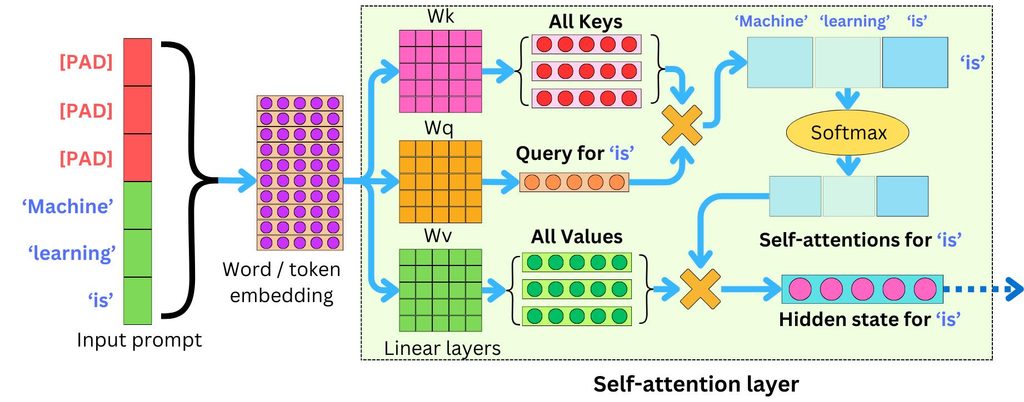
When reading a sentence, a person does not interpret every word in isolation. The meaning of one word may depend on something several words earlier. A language model faces a related computational challenge: it must learn which pieces of context are most relevant when processing a particular word or token.
The attention mechanism gives a model a way to calculate relationships between representations and use those relationships to produce context-sensitive results.
Behind this apparently simple idea lies a substantial amount of mathematics.
Attention relies on vector representations, matrix multiplication, similarity calculations, normalization, and learned transformations. Researchers must also consider computational complexity: how the number of operations and the memory required grow as the input becomes longer or the model becomes larger.
The Transformer paper demonstrated that an architecture based on attention could perform strongly on machine-translation tasks while being more amenable to parallel processing than earlier approaches.
This matters because parallelism allows large computing systems to perform many calculations simultaneously. It makes it more practical to train models on vast datasets using specialized hardware.
A mathematical innovation in the architecture thus helped unlock an engineering advantage, which in turn helped make larger and more capable AI systems feasible.
The sequence is instructive:
- Researchers identify a limitation in existing methods.
- They develop a new mathematical or computational approach.
- Engineers translate the approach into algorithms and software.
- Specialized hardware executes the calculations at scale.
- The resulting system enables applications that previously were impractical.
The public usually encounters the fifth step. The intellectual achievement often lies in the first two.
IV. Physics: the machinery beneath the mathematics
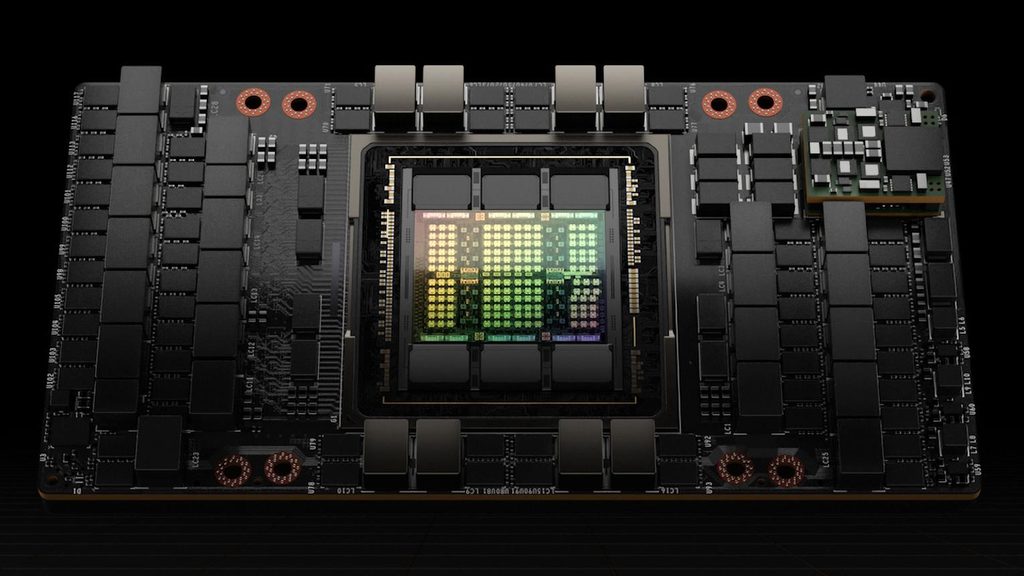
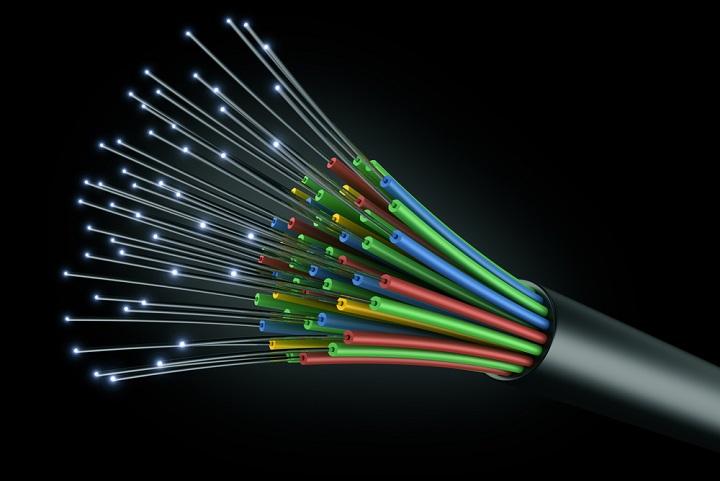
Mathematics alone cannot run the internet or an AI model. The equations must ultimately be executed by physical machines, and designing those machines requires physics.
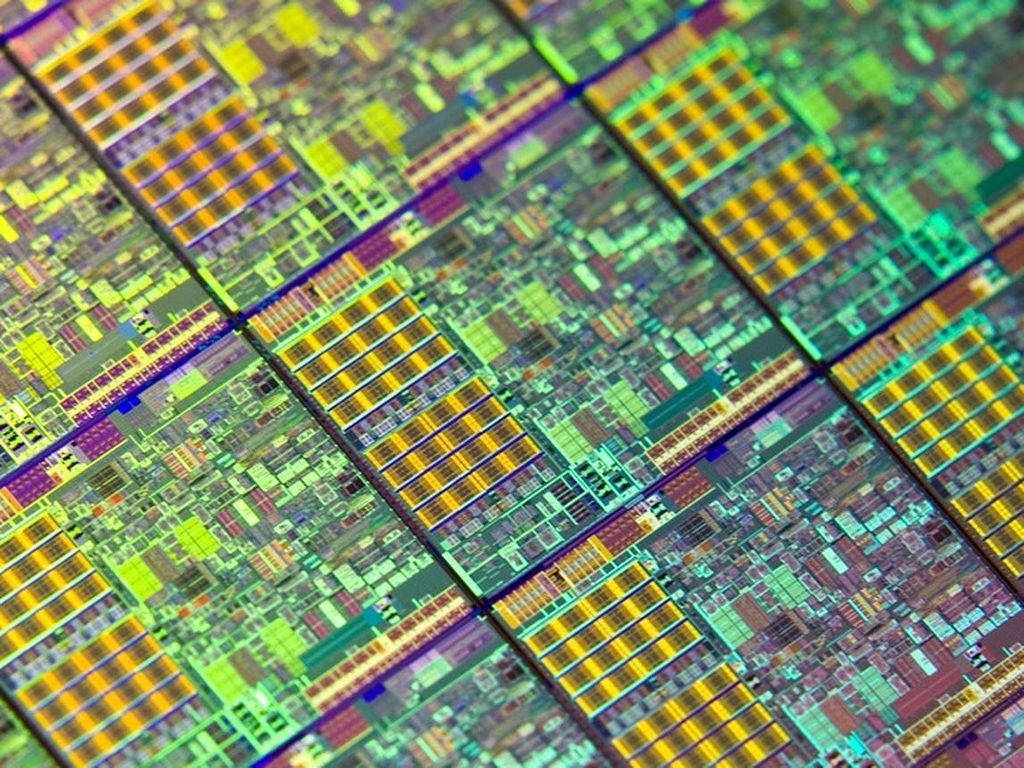
A modern computer processor is an intricate arrangement of semiconductor devices, especially transistors, that control electrical signals. Their behavior depends on the properties of materials, electric fields, and the movement of charge at extremely small scales.
As electronic components have become smaller and more densely packed, engineers have had to contend with effects that cannot always be understood through simple circuit diagrams. Semiconductor physics, electromagnetism, materials science, and quantum mechanics all contribute to understanding how modern electronic devices work.
Why quantum mechanics matters to ordinary computers
Quantum mechanics is often associated with exotic subjects such as black holes, subatomic particles, or futuristic quantum computers. But quantum theory also helps explain the behavior of the materials used in conventional electronics.
The electronic properties of silicon, for example, depend on its band structure and on how impurities can alter its electrical conductivity. Understanding these properties makes it possible to engineer semiconductor devices with predictable behavior.
The relationship between theory and application is striking. Fundamental physics helps explain what materials can do; applied physics and engineering turn that understanding into the processors that power everyday technology.
The problem of moving data
Physics also governs the transmission of information through fiber-optic cables and wireless networks.
Optical fiber carries information through pulses of light. Engineers must account for attenuation, dispersion, signal distortion, and other physical effects that can degrade transmission. Wireless communication introduces further challenges involving interference, propagation, and the behavior of electromagnetic waves.
These are problems involving physical laws, mathematical models, and practical engineering.
Artificial intelligence introduces another physical constraint: energy.
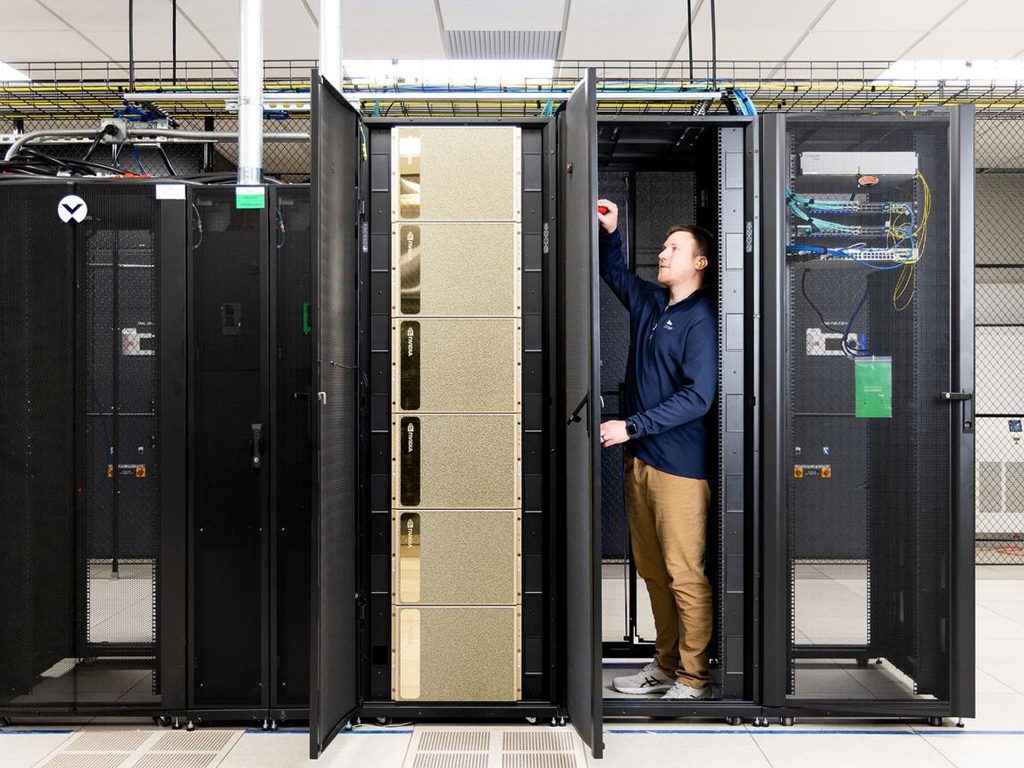
Training and operating large models requires enormous numbers of calculations. Those calculations consume electricity and generate heat. The processors, cooling systems, power supplies, and data-center networks must work together reliably.
Consequently, the future of AI depends not only on discovering better algorithms but also on improving the physical efficiency of the machines that execute them.
A mathematically elegant model that requires too much memory, electricity, or computing time may be impractical. A modest algorithmic improvement that reduces those requirements can have considerable economic value.
V. The hidden mathematics of internet security

Every time someone visits a secure website, sends a private message, or conducts an online transaction, mathematical methods help protect information from unauthorized access or alteration.
Cryptography is one of the clearest examples of advanced mathematics serving a practical purpose on a global scale.
Public-key cryptography enables people and organizations to establish secure communications even when they have not previously exchanged a secret key. Digital signatures help verify the origin and integrity of electronic documents. Hash functions support integrity checks and other security mechanisms.
These systems rely on mathematical structures and computational problems that are believed to be difficult to solve under specified conditions.
For example, some widely used cryptographic systems have relied on the difficulty of factoring very large integers or solving related mathematical problems. Their security depends on the fact that certain operations are easy to perform in one direction but computationally difficult to reverse with known methods on conventional computers.
That distinction is essential. Cryptography does not generally depend on a problem being absolutely impossible to solve. It depends on a carefully analyzed balance between the capabilities of an attacker and the computational resources required to defeat the system.
This is why mathematicians and computer scientists spend years analyzing cryptographic algorithms. A flaw in an algorithm’s mathematical assumptions can compromise information across enormous numbers of devices.
Preparing for quantum computers
The relationship between mathematics, physics, and technology becomes especially apparent when researchers consider future quantum computers.
A sufficiently powerful quantum computer could undermine certain cryptographic systems that protect current internet communications. The prospect has motivated a major effort to develop post-quantum cryptography: algorithms designed to resist attacks from both conventional and quantum computers.
In 2024, the U.S. National Institute of Standards and Technology finalized its first three post-quantum cryptography standards. Several of these approaches rely on structured mathematical problems involving lattices or on hash functions.
A lattice, in this context, is a mathematical arrangement of points generated by combinations of vectors. Certain problems involving high-dimensional lattices appear difficult to solve efficiently, even for a sufficiently capable quantum computer. Researchers use such mathematical structures to develop cryptographic systems intended to remain secure in the quantum era.
The important qualification is that no cryptographic method should be considered invulnerable merely because its mathematics is complicated. Security depends on the particular algorithm, its assumptions, the best known attacks, and the correctness of its implementation.
Nevertheless, the broader lesson is unmistakable: the security of future digital infrastructure depends on continuing mathematical research.
VI. Statistics, probability, and the problem of knowledge
Artificial intelligence does not merely calculate. It makes predictions based on patterns in data.
This brings statistics and probability to the center of the story.
Suppose a model is trained on millions of examples of written language. It learns statistical relationships that help it estimate which words or tokens are likely to follow a given context. More sophisticated training procedures teach it to produce useful responses across a broad range of tasks.
But statistical success is not the same as guaranteed truth.
A model may generate a plausible answer that is factually wrong. Its training data may contain errors or biases. A pattern that works well in one setting may fail in another.
Researchers therefore need statistical methods to evaluate models, measure uncertainty, compare performance, and identify failures.
Some important questions include:
- Does the model generalize to examples it has never encountered?
- Is its apparent improvement statistically meaningful?
- Does it perform reliably across different populations and circumstances?
- How sensitive are its predictions to changes in the input?
- Can its uncertainty be measured and communicated appropriately?
These questions can be technically difficult. A model that performs impressively on a benchmark may still fail under conditions that differ from the benchmark’s assumptions.
Mathematical statistics helps researchers understand these limitations. It also provides methods for distinguishing genuine improvement from misleading results.
This is especially important as AI systems are used in scientific research, medicine, transportation, finance, and other fields where an erroneous prediction can have serious consequences.
VII. Computer science: discovering the limits of computation
Not every important question in digital technology is a question of physics or calculus. Some belong to theoretical computer science, which investigates what can be computed, how efficiently it can be computed, and which problems may resist practical solutions.
One of its central concepts is computational complexity.
Two algorithms might produce exactly the same answer, but one may require a fraction of the computing time or memory of the other. At small scales, the difference may be unimportant. At the scale of modern AI, it can determine whether a system is economically feasible.
Researchers study how the computational cost of an algorithm grows with the size of its input. They investigate whether a problem can be solved efficiently, whether approximations are acceptable, and whether parallel processing can reduce the time required.
These questions matter enormously in AI.
Training a large neural network involves repeated operations over massive collections of numbers. Researchers must decide how to distribute the workload across processors, how to organize data, how to reduce memory requirements, and how to prevent numerical errors from accumulating.
The best mathematical model is not necessarily the best practical system. An algorithm that delivers slightly better results but requires vastly more computation may be less useful than a more efficient alternative.
Theoretical computer science helps explain these trade-offs.
It also reminds us that more computing power cannot automatically solve every problem. Some computational tasks remain prohibitively expensive even when machines become faster. Others require new algorithms, different assumptions, or entirely different approaches.
The next great breakthrough in AI may therefore come not simply from building a bigger system, but from discovering a better way to compute.
VIII. Why the next generation of breakthroughs may come from unexpected places
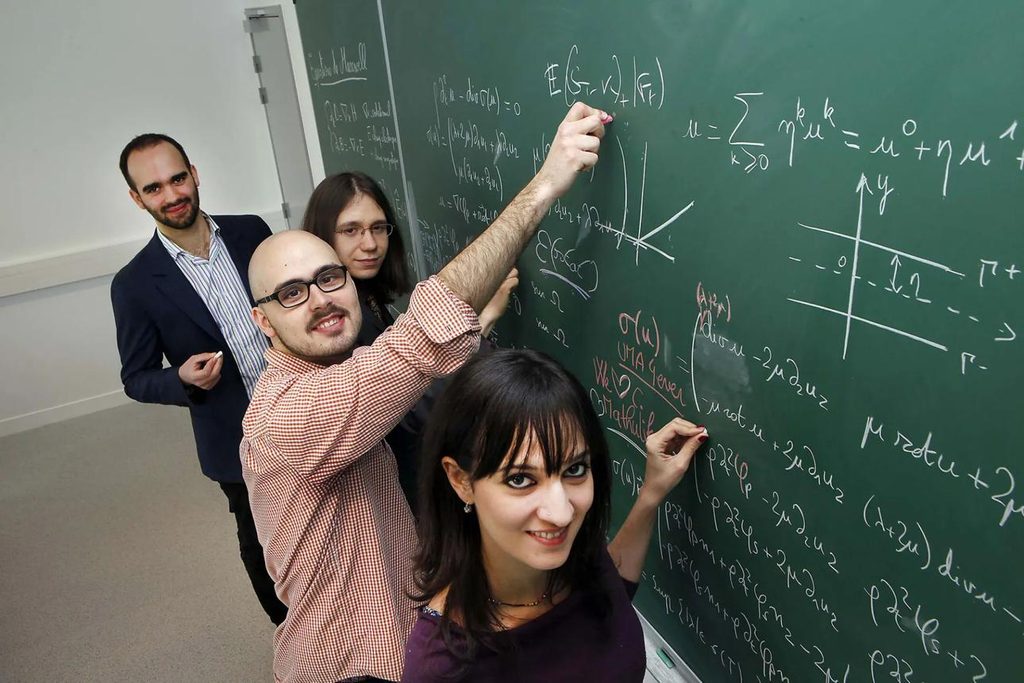
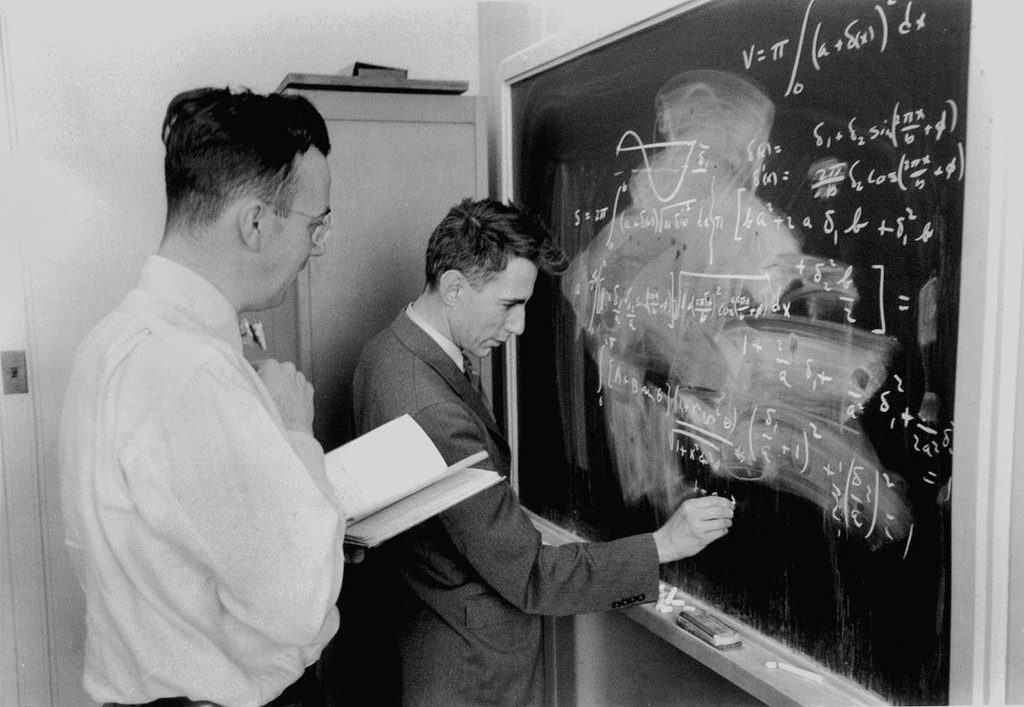
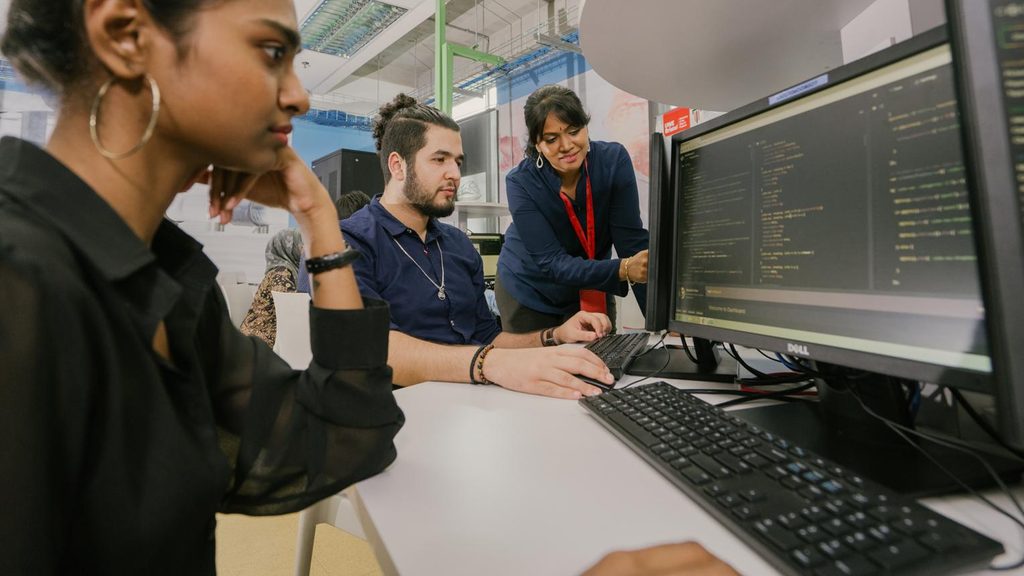
History suggests that the relationship between abstract knowledge and practical invention is rarely straightforward.
Shannon’s information theory was published in 1948, decades before the internet became a familiar feature of daily life. The Transformer architecture emerged from research into machine learning and language processing, then became a foundation for a much wider range of AI applications.
In both cases, the eventual impact extended far beyond the original research problem.
This is a recurring feature of scientific progress. Researchers investigate a question because it is intellectually compelling, because it solves a specific technical problem, or because existing theories leave something unexplained. Years later, another generation of scientists discovers that the resulting ideas can be applied somewhere entirely different.
The connection between disciplines is particularly important today.
Mathematicians may develop more efficient optimization methods. Physicists may discover new ways to build computing devices. Computer scientists may devise better algorithms for distributing calculations. Statisticians may develop stronger ways to assess uncertainty. Engineers may translate these insights into practical systems.
Each field contributes something different, and breakthroughs often occur at their boundaries.
There is also a compelling educational implication. If society wants to develop future generations of technological innovators, it must do more than teach students to use existing software. It must help them understand the principles that make new software possible.
That means supporting mathematics, physics, statistics, engineering, and computer science—not as isolated subjects, but as complementary ways of understanding the world.
It also means recognizing that not every student needs to become a theoretical physicist. A strong technological ecosystem requires people who can formulate abstract theories, build practical systems, test results, understand human needs, and determine how innovations should be used responsibly.
Advanced research is indispensable, but it does not operate in isolation.
IX. The doctorate is not the point. The depth of understanding is.
There is a temptation to interpret this story as an argument that only people with PhDs can create meaningful technology. That would be a mistake.
Many important inventions have come from people working outside traditional academic careers. Skilled software engineers, hardware designers, entrepreneurs, and self-taught programmers have all made significant contributions.
Nor does a doctorate guarantee an important discovery. Academic credentials indicate a particular form of training, not an automatic capacity for innovation.
The real distinction is between using a technology and developing the knowledge that makes a new technology possible.
A person can build a website without understanding the mathematics of network routing. A developer can use an existing AI model without knowing how backpropagation works. A business can deploy encryption without inventing the cryptographic algorithm.
That is one of the great strengths of modern technology: layers of complexity can be hidden behind convenient interfaces.
But someone, somewhere, must understand those layers well enough to improve them, diagnose their failures, and invent what comes next.
When the existing tools are insufficient, deep knowledge becomes especially valuable.
The people developing new AI architectures, designing next-generation processors, improving cryptographic security, and exploring new forms of computation often need to work at the frontier of their respective disciplines. That frontier may involve mathematics so specialized that only a relatively small community of researchers understands the details.
Yet the consequences of their work may eventually be experienced by billions of people.
Conclusion: the power of ideas that have no immediate use
The internet and artificial intelligence offer a lesson that extends well beyond technology.
Some of the most valuable human discoveries begin as investigations into questions that seem remote from ordinary life. A mathematician studies the properties of an abstract structure. A physicist develops a theory of matter. A computer scientist examines the limits of an algorithm. At the time, there may be no obvious commercial application.
Years later, the work becomes part of the foundation of a technology that transforms society.
This does not mean every theoretical discovery will prove useful, or that governments and universities should fund research without regard to its quality or cost. It means that the value of fundamental research cannot always be measured by its immediate practical return.
The internet depends on theories of information and communication. Artificial intelligence depends on calculus, linear algebra, probability, optimization, and the science of computation. The hardware beneath both depends on physics and materials science. Their security depends on cryptography, number theory, and the continuing work of researchers who examine mathematical problems that most users will never encounter.
These are not peripheral contributions. They are part of the underlying intellectual architecture of the digital age.
And as technology advances, the importance of that architecture is likely to grow.
The next transformation may come from a new mathematical method for training AI, a more efficient way to perform computation, a discovery in semiconductor physics, or a theoretical insight that makes a previously impossible task practical.
We cannot know precisely which idea will prove decisive. That uncertainty is itself an argument for sustaining serious scientific inquiry.
The machine may be visible. The equations may be hidden. But behind many of the technologies reshaping civilization lies an enduring human capacity: to pursue an abstract idea far enough that it eventually changes the material world.
That is why advanced mathematics and theoretical science matter. They do not merely explain the technologies we already possess.
They help define the technologies we will be able to invent.
Further reading
- Claude E. Shannon, A Mathematical Theory of Communication (1948). Read the original paper.
- Ashish Vaswani and colleagues, Attention Is All You Need (2017). Read the Transformer paper.
- U.S. National Institute of Standards and Technology, Post-Quantum Cryptography. Explore the research and standards.